
|
Quick Guide |
Meaning |
Why It Matters |
|
Words of Affirmation |
Loving words and praise |
Builds confidence |
|
Acts of Service |
Helpful actions |
Reduces stress |
|
Receiving Gifts |
Thoughtful presents |
Shows care |
|
Quality Time |
Full attention together |
Deepens connection |
|
Physical Touch |
Hugs, holding hands, closeness |
Creates warmth |
Why Everyone Is Talking About Love Languages
Relationships are not only about romance, gifts, or grand gestures. Many couples care deeply for each other but still feel misunderstood. That is where the five love languages explained becomes such an interesting topic. It helps people understand how they give and receive love in daily life.
Sometimes one partner says, “I do so much for you,” while the other says, “You never say you love me.” Both may be loving sincerely, but in different ways. This is why learning what the 5 love languages can completely change communication between couples.
If you have ever wondered why some gestures make you feel loved while others do not, this guide is for you.
Love Language Meaning: What Does It Really Mean?
The simple love language meaning is the preferred way a person feels valued, appreciated, and emotionally connected. Everyone can enjoy all five styles, but usually one or two feel strongest.
Understanding love languages in relationships can help avoid unnecessary fights. It also helps people stop guessing and start loving their partner in the way that truly matters.
For example, buying flowers may feel romantic to one person, but another may prefer a long conversation and undivided attention.
What Are the 5 Love Languages?
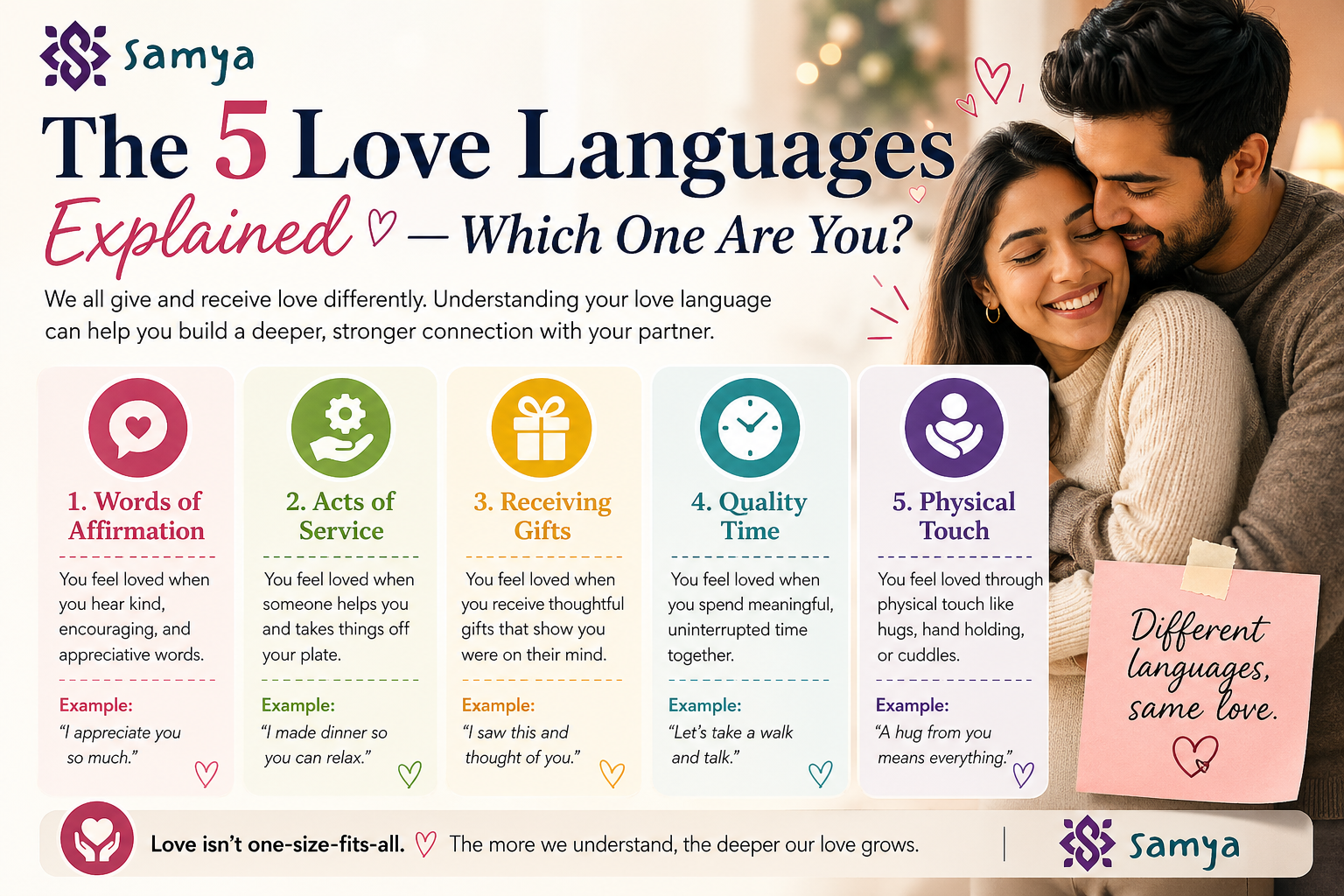
Words of Affirmation
This language is all about spoken love, praise, and encouragement. If kind words matter deeply to you, this may be your style. The love language words of affirmation meaning includes saying things like “I appreciate you,” “You look amazing,” or “I’m proud of you.”
People with this preference remember words for a long time. Harsh criticism can hurt them more than others.
Acts of Service
Some people feel loved when someone helps them. The love language acts of service meaning includes actions like making tea, helping with chores, fixing something broken, or taking pressure off their day.
For these people, actions truly speak louder than words. Saying “I love you” is nice, but helping when they are tired means even more.
Receiving Gifts
This is often misunderstood. It is not about money or expensive presents. It is about thoughtfulness. A handwritten note, favorite snack, or small surprise can mean a lot.
The real message is: “I thought of you.”
Quality Time
The love language quality time meaning is focused attention. No scrolling phones, no distractions, no half-listening. It means real presence.
A simple walk together, coffee date, or meaningful talk can fill this person’s emotional tank.
Physical Touch
For some people, closeness matters most. Hugs, holding hands, cuddling, or a reassuring touch can communicate love instantly.
This does not only mean romance. Even a gentle hand on the shoulder can bring comfort.
5 Love Languages With Examples
To understand 5 love languages with examples, imagine this couple after a stressful workday.
One partner says, “You handled that so well.” That is Words of Affirmation.
One partner cooks dinner without being asked. That is Acts of Service.
One partner brings home their favorite chocolate. That is Receiving Gifts.
One partner sits down and asks, “Tell me about your day.” That is Quality Time.
One partner gives a warm hug at the door. That is Physical Touch.
Each action says love in a different language.
What Is My Love Language?
Many people ask, what is my love language because they are unsure what affects them most emotionally. A good clue is this: what do you complain about most often, and what makes you happiest?
If you often say, “You never spend time with me,” Quality Time may matter most.
If you often wish for appreciation, Words of Affirmation may be key.
If help means everything when life gets busy, Acts of Service could be your answer.
How to Find Your Love Language
If you are asking how to find your love language, start by noticing your emotional reactions. Which gestures stay with you? Which ones disappoint you when missing?
Think about childhood too. Sometimes people value what they received often, or deeply miss what they lacked.
Talking openly with your partner also helps. Many couples discover different needs only after honest conversations. This is why love languages for couples can be such a powerful tool.
Love Languages in Relationships: Why They Matter
Understanding love languages in relationships can reduce resentment and increase closeness. Many couples love each other but express it in mismatched ways.
A husband may keep fixing problems through Acts of Service, while his wife wants Quality Time. A wife may give compliments constantly, while her husband values Physical Touch.
Neither person is wrong. They are simply speaking different emotional languages.
That is why five love languages explained remains so popular. It gives a practical way to connect.
Love Languages for Couples: Make It Work Daily
Healthy love languages for couples are not about perfection. They are about effort and awareness.
If your partner values Words of Affirmation, appreciate them out loud.
If they love Quality Time, put the phone away.
If they value Acts of Service, help before being asked.
Small consistent effort matters more than dramatic gestures.
FAQs
What are the 5 love languages?
They are Words of Affirmation, Acts of Service, Receiving Gifts, Quality Time, and Physical Touch.
What is my love language?
Notice what makes you feel most loved and what hurts most when missing.
How to find your love language?
Reflect on your needs, reactions, and relationship patterns. Honest conversations help too.
Can couples have different love languages?
Yes, very often. Learning each other’s style improves connection.
Are love languages useful?
They can be very helpful for communication, empathy, and stronger bonding.
Final Thoughts
Now that you know what the 5 love languages are, the next step is simple: observe yourself, understand your partner, and communicate better. Love becomes easier when both people feel seen, heard, and valued. Samya