
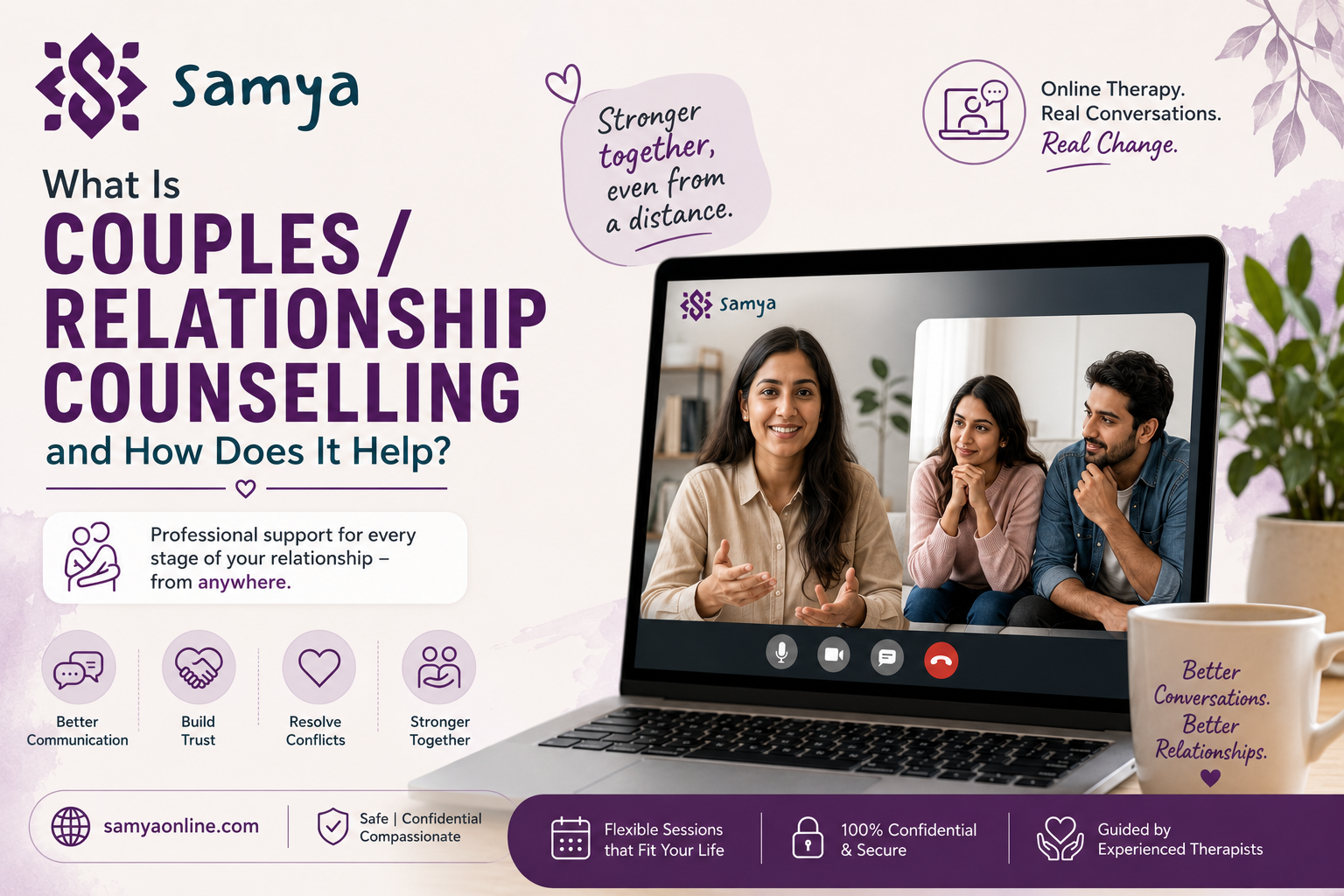
Relationships are messy. Not in a bad way, necessarily, but in the way that two people with different upbringings, different communication styles, and different ideas of what a "normal" Tuesday looks like end up sharing a life. Somewhere along the way, most couples hit a wall, and that's usually when the idea of getting outside help starts floating around in conversation, sometimes said hesitantly, sometimes said with relief that there's finally a name for what they need.
Here's a quick look at how counselling typically compares to just working things out on your own:
|
Aspect |
Doing It Alone |
With Relationship Counselling |
|
Communication |
Often circular, same fights repeat |
Structured, guided by a neutral party |
|
Emotional safety |
Can feel one-sided or defensive |
Both partners get equal space to speak |
|
Pattern recognition |
Hard to see your own blind spots |
Therapist helps identify recurring patterns |
|
Timeframe |
Can drag on for years unresolved |
Often shows progress within a few sessions |
|
Outcome |
Either resolution or resentment builds |
Clearer path forward, together or apart |
So What Exactly Is Relationship Counselling?
At its core, couples counselling is a space where two people sit down with a trained professional to talk through what isn't working and, just as importantly, what is. It's not about assigning blame or deciding who's "right." A good relationship advisor acts more like a translator, helping each partner understand what the other is actually trying to say beneath the frustration, the silence, or the sarcasm. Couples usually walk in expecting to talk about one specific fight, and end up realising the real issue was sitting quietly underneath it the whole time.
Why Do Couples Actually Seek It Out?
Nobody wakes up one morning and decides to book a session for fun. Usually there's a build-up small disagreements that never got resolved, trust that took a hit, or simply the feeling of growing apart while still sharing a bed. Sometimes it's triggered by something obvious, like an affair or a big fight. Other times it's quieter, like two people who've stopped really talking and are now just coexisting. Either way, showing up for professional help isn't a sign that the relationship has failed. If anything, it's a sign both people still care enough to fix it.
Spotting the Red Flags Before They Become Bigger Problems
Every relationship has friction, but there's a difference between normal disagreements and genuine warning signs. Constant criticism, feeling like you're walking on eggshells, or one partner controlling the other's friendships and finances are classic red flags in a relationship that shouldn't be brushed off as "just how they are." Decades of relationship research point to a specific set of communication patterns that reliably predict when a relationship is in trouble. If you've ever found yourself googling what is red flag in relationship at 1 AM after a rough night, you're not alone plenty of people only recognise these patterns once they see them written down somewhere.
So what is the meaning of red flag in relationship, really? It's essentially any recurring behaviour that chips away at trust, respect, or safety over time. A single bad day isn't a red flag. A pattern of dismissiveness, jealousy, or manipulation, though, usually is. Counselling can help couples name these patterns early, before they harden into something much harder to undo.
How a Session Actually Works
Contrary to what movies show, nobody's lying on a couch talking about their childhood for an hour straight (well, not always). A typical session starts with the therapist asking both partners what's been going on lately, then gently steering the conversation toward the deeper issue. There might be some structured exercises too communication drills, listening practices, or even a simple compatibility questions for couples worksheet to get both people reflecting on where they actually stand. It's less clinical than people expect, and far more conversational.
Online or In-Person: Does It Matter?
These days, relationship counselling online has become just as common as sitting in a therapist's office, and for a lot of Indian couples juggling work schedules, travel, or simply feeling more comfortable talking from home, it's often the easier option. Online couples therapy works the same way as in-person sessions same structure, same trained professionals just over video call instead of across a room. The comfort of being in your own space sometimes even makes couples open up faster than they would in an unfamiliar office.
Can You Check Compatibility Before Things Go Wrong?
Not every couple waits until there's a crisis to seek support. Plenty of people, especially those in newer relationships or heading toward marriage, use tools like a couple compatibility test just to understand where they align and where they might clash later. These aren't meant to predict the future with certainty. Still, they do open up conversations that couples might otherwise avoid, things like finances, family expectations, or how each person handles conflict. Think of it less as a verdict and more as a mirror.
What Actually Changes After Counselling?
This is the part people are most curious about, and honestly, it varies. Some couples come out with a completely new way of communicating: fewer blowups, more check-ins, less assuming the worst about each other. Others realise, through the process, that they've grown in different directions and decide to part ways amicably, which in itself is a valuable outcome for a sense of how this actually plays out; real stories from couples who've been through it say a lot more than any theory can. The goal was never to force every couple to stay together. It's to help two people make a clearer, more honest decision about their relationship, whatever that decision ends up being.
Is It a Sign of Weakness to Ask for Help?
This question comes up constantly, and the answer is simply no. If anything, the couples who avoid getting support tend to let small issues snowball until there's nothing left to salvage. Reaching out to someone trained to guide you both early on is far more proactive than waiting until resentment has already taken root; in fact, there are some clear signs you should never ignore that point to the right moment to start. There's nothing weak about wanting your relationship to actually work instead of just quietly falling apart.
Frequently Asked Questions
How many sessions does couples counselling usually take?
It varies widely, but many couples start noticing shifts within four to six sessions, though deeper issues can take longer to work through.
Is virtual counselling as effective as in-person sessions?
Research and clinical experience both suggest that online sessions can be just as effective, especially for couples who find it easier to open up in a familiar environment.
What if only one partner wants to attend counselling?
Some therapists do offer individual sessions focused on the relationship, though joint sessions tend to bring faster and more balanced progress.
Can counselling help even if we're not fighting a lot?
Yes, plenty of couples come in simply to strengthen communication or prepare for a major life change, not just to resolve conflict.
Every relationship goes through rough patches, and needing support through one of them isn't a failure; it's just part of being human together. If you and your partner are ready to talk things through with someone who actually gets it, Samya's team is there to help at samyaonline.com.