
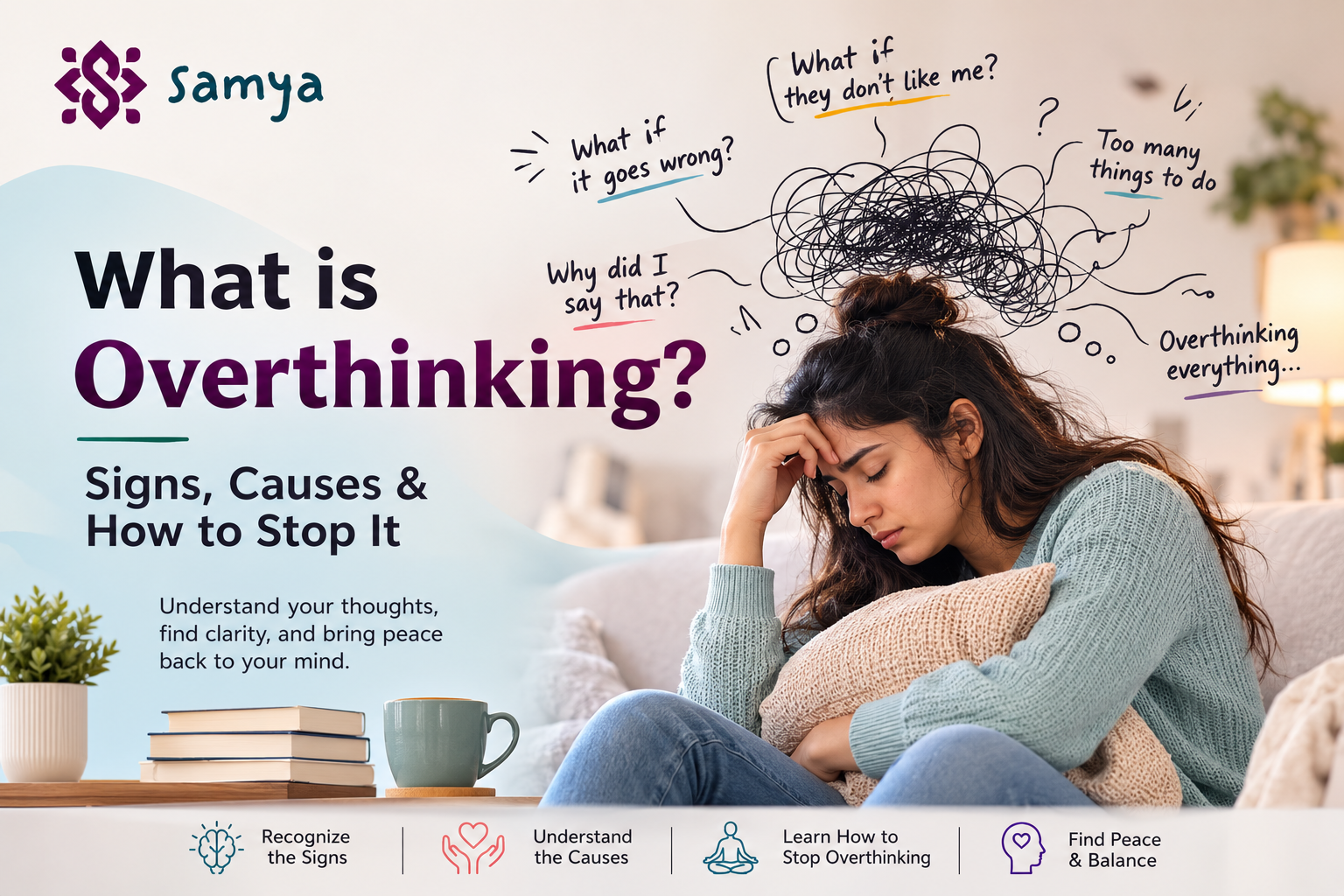
Have you ever replayed the same conversation in your head again and again? Or spent hours thinking about a decision so much that you ended up not decide at all? If yes, you're not alone. Overthinking has become one of the most common problems in today's fast-moving world. Whether it's about work, relationships, studies, health, or the future, many people get trapped in endless thoughts that drain their energy and peace of mind.
The overthinking meaning is simple it is the habit of thinking too much about a situation instead of taking action. While thinking helps us solve problems, overthinking often creates problems that don't even exist. It can make small issues feel much bigger and leave you feeling mentally exhausted.
The good news is that overthinking is not permanent. Once you understand why it happens and recognize the warning signs, you can learn how to stop overthinking and regain control over your thoughts. This article explains everything you need to know, including overthinking symptoms, common causes, and practical overthinking solution techniques that can help you feel calmer and happier.
What Is Overthinking?
The meaning of overthinking refers to repeatedly analyzing, worrying, or replaying situations without reaching a helpful conclusion. Instead of solving a problem, your mind keeps going in circles.
Imagine sending a text message and not getting a reply for an hour. Instead of assuming the other person is busy, your mind starts asking questions.
"Did I say something wrong?"
"Are they upset with me?"
"What if they never reply?"
This chain of thought continues even though there is no proof that anything is wrong. That is overthinking.
Overthinking usually falls into two common patterns. The first is worrying constantly about the future. The second is replaying events from the past and wishing things had happened differently. Both patterns increase stress without offering real solutions.
Why Do People Overthink?
There isn't one single reason behind overthinking. Different people experience it for different reasons.
One of the biggest causes is fear of making mistakes. Many people believe every decision must be perfect, so they keep analyzing every possibility.
Past experiences can also play a role. Someone who has been hurt emotionally may become extra cautious and begin questioning everything.
Stress is another common trigger. When responsibilities increase, the brain tries to prepare for every possible outcome. Unfortunately, instead of helping, this often leads to endless thinking.
Low confidence also contributes to overthinking. People who doubt themselves often seek reassurance repeatedly and struggle to trust their own decisions.
Sometimes social media makes things worse. Constant comparison with others can create unrealistic expectations and unnecessary worries about personal success, appearance, or relationships.
Common Overthinking Symptoms
Recognizing overthinking symptoms early can help you manage them before they affect your daily life.
One common symptom is replaying conversations repeatedly, wondering whether you said the right thing.
Another sign is imagining worst-case scenarios even when there's little evidence they will happen.
Many people with overthinking also struggle with making simple decisions because they keep analyzing every option.
Difficulty sleeping is another major symptom. The body may be tired, but the mind refuses to switch off.
Some people constantly seek reassurance from friends or family because they cannot trust their own judgment.
Feeling mentally exhausted without doing much physical work is another common experience.
If these overthinking symptoms continue for a long time, they can affect both emotional and physical well-being.
How Overthinking Affects Daily Life
Many people think overthinking is harmless because it happens only inside the mind. In reality, it can affect nearly every part of life.
At work, it reduces productivity because too much time is spent thinking instead of acting.
In relationships, overthinking can create misunderstandings. Reading too much into someone's words or actions may lead to unnecessary arguments.
Students may spend more time worrying about exams than actually preparing for them.
Overthinking can also affect physical health. Constant mental stress may contribute to headaches, muscle tension, fatigue, and poor sleep.
Over time, the habit can reduce confidence because every decision feels risky or uncertain.
The Connection Between Overthinking and Anxiety
Although they are not the same, overthinking and anxiety often go together.
When someone feels anxious, their brain searches for possible dangers. This naturally increases worrying and repetitive thinking.
Likewise, continuous overthinking can increase anxiety because the brain keeps imagining negative outcomes.
Breaking this cycle is important for emotional well-being. The sooner you recognize the pattern, the easier it becomes to manage your thoughts.
How to Stop Overthinking
Learning how to stop overthinking doesn't mean stopping all thoughts. Instead, it means learning to think more healthily.
The first step is becoming aware of your thoughts. Whenever you notice yourself replaying the same situation repeatedly, pause and ask yourself whether this thinking is helping or hurting.
Another effective strategy is focusing only on what you can control. You cannot control every outcome, but you can control your actions today.
Setting a time limit for decisions also helps. Instead of spending hours analyzing every option, give yourself a reasonable deadline and move forward.
Mindfulness can also be powerful. Paying attention to your breathing, surroundings, or present moment helps shift attention away from endless mental loops.
Writing your thoughts in a journal is another simple way to organize your mind. Often, worries seem much smaller once they are written on paper.
Reducing screen time may also help. Constant exposure to social media can fuel comparison and unnecessary thinking.
If overthinking becomes overwhelming, talking to someone you trust can provide a fresh perspective.
Best Overthinking Solution Techniques
Finding the right overthinking solution depends on your situation, but several techniques work well for many people.
Deep breathing helps calm the nervous system when thoughts become overwhelming.
Regular physical activity reduces stress hormones and improves mood.
Maintaining a healthy sleep routine gives your brain time to recover and process emotions.
Practicing gratitude shifts attention away from worries toward positive experiences.
Breaking large problems into smaller steps makes challenges feel more manageable.
Another useful overthinking solution is replacing "What if something goes wrong?" with "What if things work out well?"
These small mental changes gradually reduce the habit of excessive thinking.
When Should You Seek Professional Support?
Sometimes overthinking becomes so frequent that it interferes with work, relationships, sleep, or daily activities.
If your thoughts feel impossible to control or are causing ongoing emotional distress, speaking with a mental health professional can be helpful.
Professional support does not mean something is wrong with you. It simply means you're getting guidance to develop healthier thinking habits and coping strategies.
Early support often prevents small challenges from becoming bigger problems later.
Simple Daily Habits That Reduce Overthinkin
Small daily habits can make a big difference.
Start your morning without immediately checking your phone.
Spend a few minutes exercising or stretching.
Take short breaks during work instead of pushing yourself continuously.
Talk openly with trusted family members or friends.
Celebrate small achievements instead of focusing only on mistakes.
Remember that progress is better than perfection.
These habits gradually reduce overthinking and improve emotional balance.
Final Thoughts
Everyone experiences overthinking at some point. The difference is whether those thoughts stay for a few minutes or begin controlling your life. Understanding the overthinking meaning, recognizing overthinking symptoms, and learning how to stop overthinking can help you regain peace of mind.
There is no instant overthinking solution, but small daily changes create lasting results. By focusing on what you can control, practicing mindfulness, maintaining healthy routines, and asking for support when needed, you can train your mind to think more clearly and worry less.
You deserve a calmer mind and a healthier relationship with your thoughts.
Frequently Asked Questions (FAQs)
What is the meaning of overthinking?
The meaning of overthinking is repeatedly thinking about the same situation, problem, or decision without reaching a productive conclusion. It often increases stress instead of solving problems.
What are the common overthinking symptoms?
Common overthinking symptoms include constant worrying, replaying conversations, difficulty sleeping, imagining worst-case scenarios, mental exhaustion, and struggling to make decisions.
How to stop overthinking naturally?
If you're wondering how to stop overthinking, start by practicing mindfulness, writing down your thoughts, exercising regularly, limiting social media, focusing on what you can control, and setting time limits for decisions.
What is the best overthinking solution?
The best overthinking solution combines healthy habits like good sleep, regular exercise, mindfulness, positive self-talk, journaling, and seeking professional support if needed.
Can overthinking affect physical health?
Yes. Overthinking can contribute to headaches, muscle tension, poor sleep, fatigue, increased stress, and reduced concentration if it continues for a long period.
Brand: Samya - If persistent overthinking is affecting your emotional well-being or relationships, seeking guidance from experienced mental wellness professionals can help you build healthier thought patterns and improve your quality of life.