
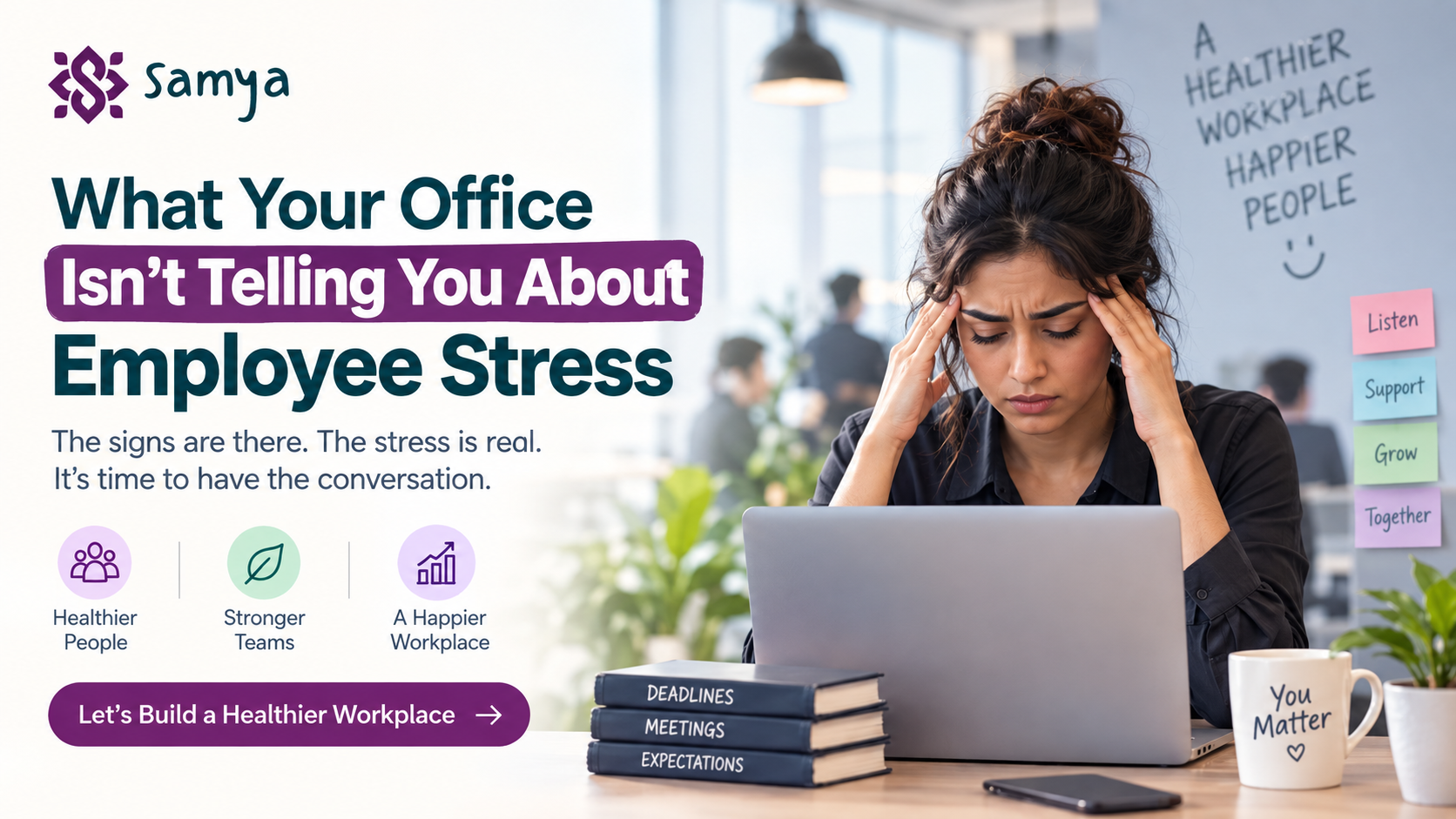
Every office runs on a kind of unspoken agreement. Everyone shows up, does their work, smiles in meetings, and nobody really talks about how they're actually feeling. This is exactly why workplace stress stays hidden for so long. It's not that stress doesn't exist in your office, it's that most of it never gets said out loud.
Employee stress at work has become so normal that people barely recognise it as a problem anymore. It just feels like "how work is." But that quiet acceptance is exactly what makes it dangerous.
Why Nobody Talks About Stress at Work
There's a simple reason why employees don't talk about stress. Nobody wants to be seen as the person who can't handle pressure. In most workplaces, stress is treated like a personal weakness rather than a shared reality. So people push through, stay quiet, and hope it passes.
This creates what can only be called unspoken workplace stress, a kind of tension that everyone senses but nobody names. Managers see it in dropping energy levels, employees feel it in their bodies, but the conversation never actually happens. This is also why stress employees don't report ends up being far more common than any HR survey will ever show.
The Signs Are There, You Just Have to Look
Hidden signs of stress at work rarely look dramatic. Nobody breaks down in a meeting. Instead, it shows up in small, easy-to-miss ways.
Here's a simple way to spot what's usually happening beneath the surface:
|
What You See |
What It Might Actually Mean |
|
Employee replying late to messages |
Mental fatigue, not laziness |
|
Sudden quietness in meetings |
Feeling overwhelmed or disengaged |
|
Missed small deadlines |
Difficulty concentrating due to stress |
|
Short, snappy responses |
Emotional exhaustion building up |
|
Avoiding new responsibilities |
Fear of not being able to cope |
If you're wondering how to tell if an employee is stressed, this table is a good starting point. It's rarely one big sign, it's usually a pattern of small shifts over a few weeks.
The Culture That Keeps Stress Quiet
A lot of offices unintentionally build a stress culture in offices without even realising it. Praising people for "never taking leave" or admiring someone for "always being available" sends a quiet message: stress isn't welcome here, so keep it to yourself.
This is where quiet workplace stress signs start multiplying. People stop raising concerns, meetings become more about ticking boxes than honest conversations, and slowly, invisible stress at work becomes part of the daily routine instead of something that gets addressed.
The truth is, workplace stress nobody talks about usually isn't a mystery to leadership. Most managers already sense something is off. What's missing is the willingness to actually bring it up.
What Causes This Stress in the First Place
What causes stress in employees is rarely just one thing. It's usually a mix of unclear expectations, unrealistic deadlines, lack of recognition, and simply not feeling heard. Add constant notifications and back-to-back meetings into the picture, and it's easy to see why stress in the workplace has become such a common experience.
Work-related stress doesn't always come from a heavy workload either. Sometimes it comes from feeling like your effort goes unnoticed, or from not knowing where you stand with your manager. These quieter causes are often harder to spot than a simply busy calendar.
How to Actually Start the Conversation
Knowing how to talk to employees about stress matters more than any wellness poster on the wall. It starts with simple, direct questions asked regularly, not just during annual reviews. Something as basic as "how are you managing your workload this week?" can open doors that a formal survey never will.
A good manager's guide to employee stress would include regular one-on-ones, actively listening without jumping to solutions immediately, and creating space where saying "I'm struggling" doesn't feel like a career risk. Open communication at work and mental health initiatives work best when they're built into everyday conversations, not treated as a separate HR activity.
Fixing It Before It Becomes a Bigger Problem
How to reduce workplace stress isn't about one big gesture; it's about consistent, smaller efforts. Reasonable deadlines, clearer communication, and recognising effort regularly all add up over time. Office stress management works best when it's built into daily operations rather than saved for a once-a-year training session.
Building a stress-free workplace doesn't mean removing all pressure; some pressure is normal in any job. It means making sure employees don't feel alone while dealing with that pressure. Structured employee stress support programs give people an actual outlet instead of expecting them to figure it out on their own.
Bringing It All Together
Every office has stress. That part is unavoidable. What makes the difference is whether that stress stays silent or gets addressed early. Businesses that build real support systems, rather than one-off wellness days, tend to see fewer sick days, better retention, and teams that actually function well under pressure.
This is where Samya fits in. Rather than offering generic stress-relief tips, Samya works with organisations to understand what's actually driving pressure within their teams and builds practical, ongoing support around it, from manager training to structured counselling access. The goal isn't a quick fix, it's making sure stress gets noticed and handled before it turns into something bigger. If your workplace could use that kind of support, visit samyaonline.com to know more.
FAQs
Q1. Why do employees hide their stress at work?
Most employees worry that admitting stress will be seen as weakness or poor performance, so they push through quietly instead of speaking up.
Q2. What are the early signs of workplace stress?
Delayed responses, reduced participation in meetings, missed small deadlines, and noticeable irritability are usually the earliest indicators.
Q3. How can managers start conversations about stress?
Regular one-on-ones with open, direct questions about workload and wellbeing work far better than annual surveys or formal check-ins.
Q4. Can workplace stress be reduced without changing workloads?
Yes, clearer communication, recognition of effort, and consistent support often reduce stress even when workload stays the same.
Q5. Why do companies need structured stress support programs?
Because informal, occasional gestures rarely address the root cause, while structured programs offer consistent, long-term support for employees.