
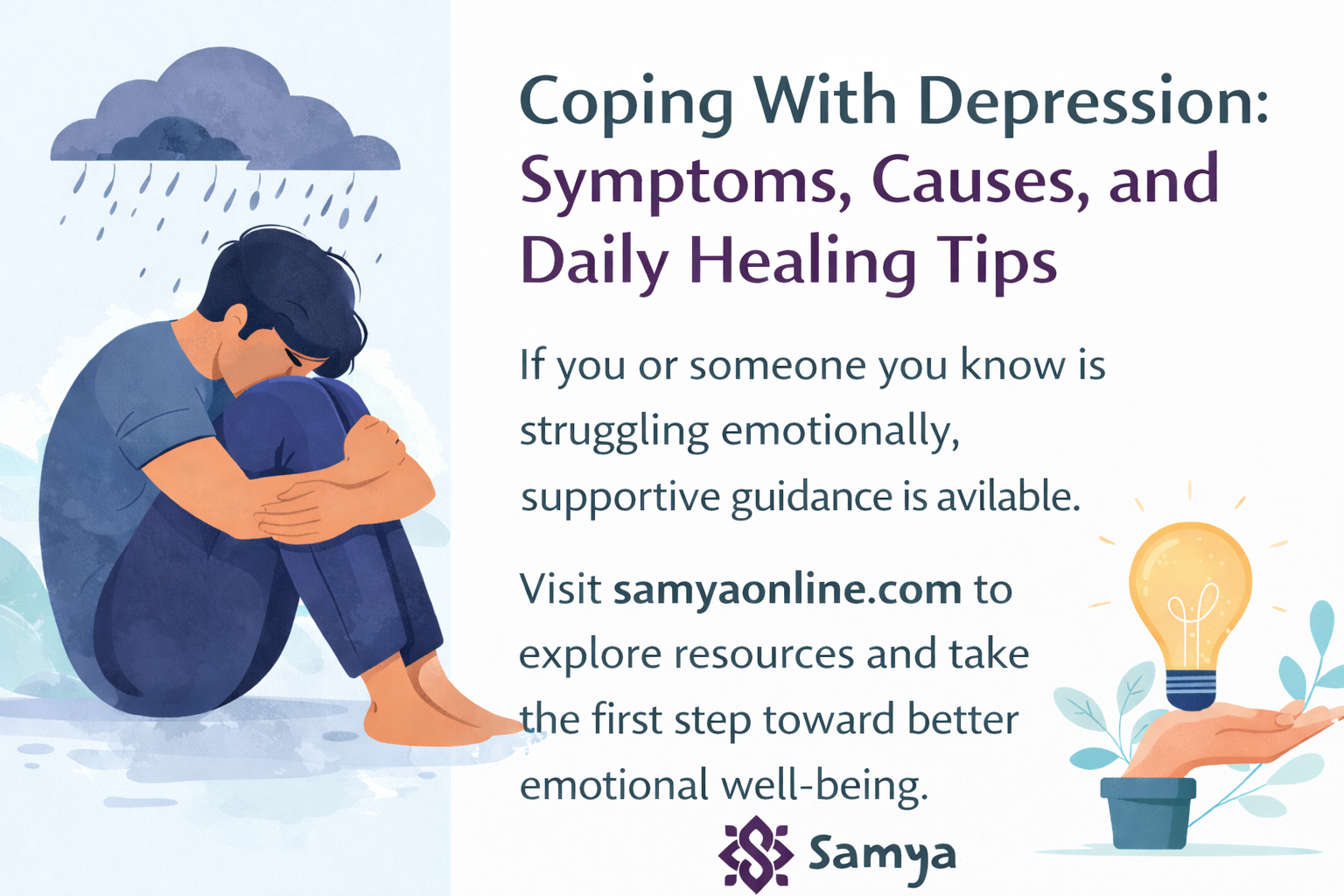
Depression is a common yet deeply misunderstood emotional condition that affects people of all ages. It can influence thoughts, emotions, energy levels, and daily activities. Many people struggle silently because they are unsure about what they are experiencing or how to manage it.
This guide explains depression in simple language, covering common symptoms, possible causes, and gentle daily ways to cope and heal emotionally.
What Is Depression?
Depression is more than temporary sadness or stress. It is a long-lasting emotional state that can affect how a person feels, thinks, and behaves. People experiencing depression may feel empty, hopeless, or constantly tired.
Without proper understanding and support, depression can impact relationships, productivity, and overall life satisfaction. Learning about depression is the first step toward emotional balance and healing.
Depression Symptoms
Depression symptoms may appear differently in each person. Some common signs include emotional, mental, and physical changes.
Common Emotional & Mental Signs
-
Feeling low or sad most of the day
- Loss of interest in activities once enjoyed
- Difficulty focusing or making decisions
- Feelings of guilt or worthlessness
Physical & Behavioral Changes
-
Low energy or constant tiredness
- Sleep disturbances
- Appetite or weight changes
- Withdrawing from people
When these symptoms persist for more than two weeks, emotional support becomes crucial.
Signs and Patterns of Depression
Depression not only affects emotions; it also influences behaviour and physical comfort. Some people experience restlessness, frequent irritation, or unexplained body discomfort. Others may lose motivation, avoid conversations, or feel disconnected from daily life.
Recognising these patterns early helps prevent emotional struggles from becoming overwhelming.
Causes of Depression
There is no single cause of depression. It often develops due to a combination of emotional, environmental, and personal factors.
Common causes include:
- Stressful life events such as loss or pressure
- Past emotional experiences
- Family background
- Long-term stress or loneliness
- Lack of emotional support
Understanding these causes helps individuals choose healthier coping paths.
Coping With Depression in Daily Life
Coping with depression is a gradual process. Small and consistent steps can create meaningful change.
- Share your feelings: Talking to trusted people eases emotional weight
- Create daily structure: Simple routines bring stability
- Stay active: Gentle movement supports emotional balance
- Practice mindfulness: Breathing and awareness calm the mind
- Avoid isolation: Stay connected, even when it feels difficult
Healing takes time, and progress happens step by step.
Emotional Support and Guided Help
Some individuals benefit from structured emotional guidance, supportive conversations, or wellness programs. Personalized support helps people understand their feelings, manage thoughts, and build healthier habits.
Seeking support is a positive step toward self-care and emotional strength.
Frequently Asked Questions (FAQs)
What is depression?
Depression is an emotional condition that affects mood, thoughts, and daily functioning. It can cause long-lasting sadness, low motivation, and loss of interest in activities.
What are common depression symptoms?
Common symptoms include persistent sadness, low energy, sleep changes, difficulty concentrating, and emotional withdrawal.
Can depression improve over time?
In some cases, mild depression improves with lifestyle changes and emotional support. Long-lasting struggles often benefit from guided help and consistency.
How can I cope with depression daily?
Daily coping includes maintaining routines, staying active, practicing mindfulness, sharing feelings, and reducing negative influences.
Where can I find online emotional support?
You can explore helpful resources and emotional support at samyaonline.com, a platform focused on mental well-being and understanding.
Final Thoughts
Depression is real, common, and manageable. Understanding its symptoms, causes, and coping methods can make a powerful difference. With the right support and small daily efforts, emotional balance and healing are possible.