
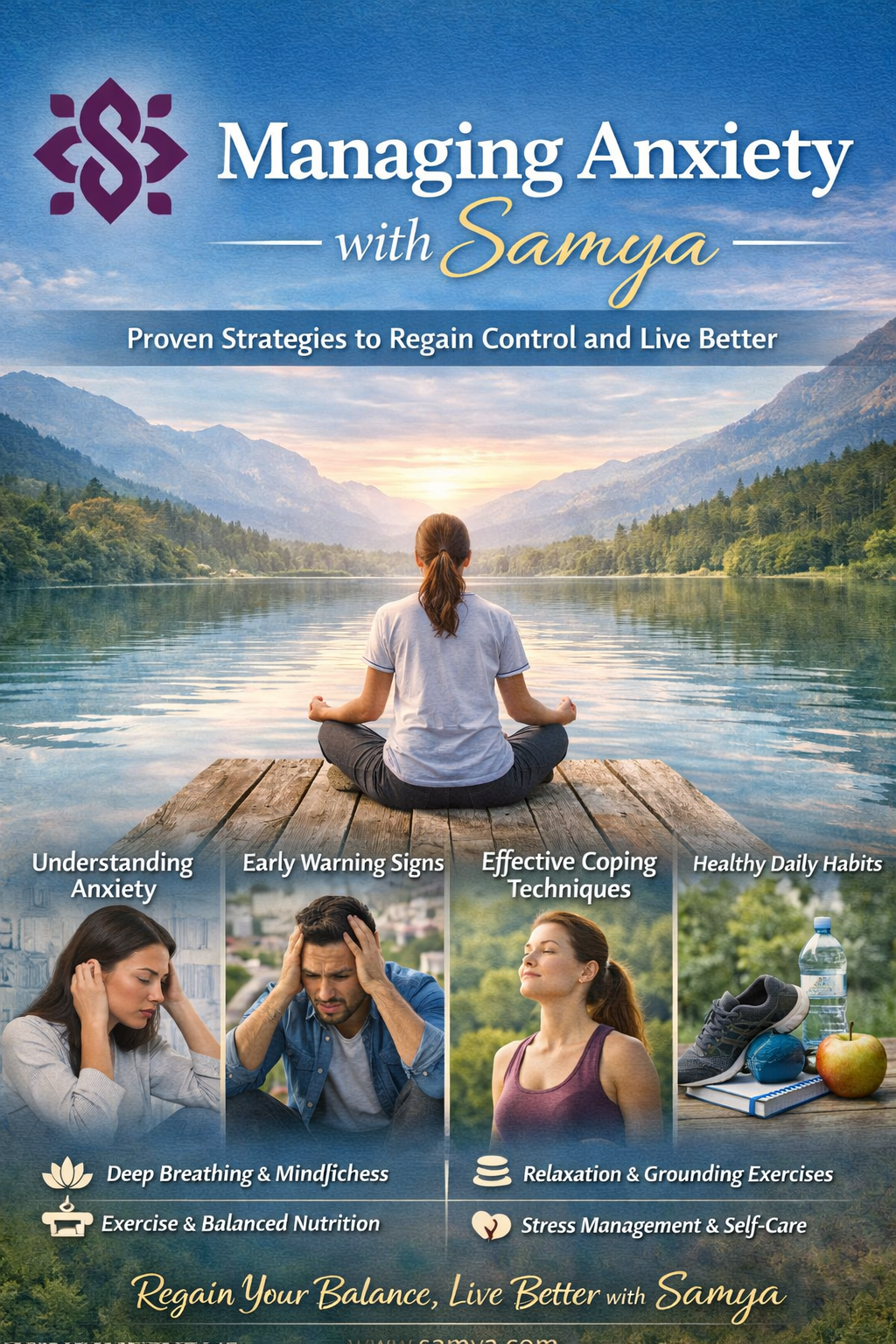
In today’s fast-moving world, managing anxiety has become an important part of maintaining emotional balance and overall well-being. Daily responsibilities, constant pressure, and overthinking can quietly build stress that affects how we feel and function. While feeling anxious at times is normal, ongoing anxiety can disturb focus, sleep, confidence, and peace of mind.
At Samya, we believe that understanding anxiety and adopting simple, natural practices can help you feel more grounded, calm, and in control. This guide explores early signs of anxiety, practical coping methods, and lifestyle habits that support long-term mental wellness.
Understanding Anxiety and Its Impact on Daily Life
Anxiety is a natural stress response, but when it becomes frequent, it can influence both emotional and physical well-being. Common signs may include constant worry, restlessness, mental fatigue, difficulty concentrating, racing thoughts, or disturbed sleep patterns.
When anxiety is ignored, it can slowly affect productivity, relationships, and personal confidence. Recognizing how anxiety shows up in daily life is the first step toward managing it in a healthier and more balanced way.
Recognizing Early Signs of Anxiety and Why They Matter
Early signs of anxiety often appear quietly and may be easy to overlook. These can include irritability, excessive thinking, avoiding certain situations, feeling tense without reason, or struggling to relax even during free time.
Awareness is important because recognizing anxiety early allows you to respond with calming practices before it starts affecting your routine. Open conversations and self-awareness also help reduce hesitation around emotional well-being and encourage positive action.
Practical Anxiety Management Techniques You Can Use Daily
There are several natural and effective ways to manage anxiety that can be practiced anytime, anywhere.
- Deep breathing exercises help slow down the mind and relax the body by bringing attention to steady, controlled breaths.
Mindfulness practices encourage awareness of the present moment and reduce unnecessary overthinking.
Relaxation techniques such as gentle stretching, guided imagery, or quiet reflection help release mental and physical tension.
Grounding techniques help bring focus back to the present during moments of heightened anxiety.
- Practicing these techniques regularly builds emotional strength and supports long-term mental balance.
Living with Anxiety: Building Supportive Daily Habits
Living with anxiety does not mean giving up on a fulfilling or peaceful life. Small, consistent lifestyle habits can make a noticeable difference over time.
Regular physical movement helps release built-up stress and improves mood naturally. Maintaining a stable sleep routine allows the mind to reset and improves emotional regulation. Balanced nutrition supports steady energy levels, while limiting overstimulation helps maintain mental clarity.
Together, these daily habits strengthen natural anxiety management and promote a calmer mindset.
Strengthening Emotional Wellness Through Self-Care
Emotional wellness grows when you allow yourself space to slow down and reflect. Setting healthy boundaries, practicing self-kindness, and giving yourself time to recharge are essential parts of managing anxiety naturally.
Activities such as journaling, spending time in nature, listening to calming music, or engaging in creative hobbies can help release emotional pressure. Mental wellness is not about removing anxiety completely—it is about learning how to respond to it with understanding and confidence.
Frequently Asked Questions :
1. What is anxiety, and how does it affect daily life?
Anxiety is a natural stress response, but when it becomes frequent, it can affect focus, emotional balance, sleep, and overall quality of life. Understanding its patterns helps manage it more effectively.
2. What are common early signs of anxiety?
Early signs may include persistent worry, restlessness, irritability, difficulty concentrating, muscle tension, or disturbed sleep patterns. Recognizing these signs early makes anxiety easier to manage.
3. How can anxiety be managed naturally?
Anxiety can be managed naturally through breathing exercises, mindfulness practices, grounding techniques, regular movement, healthy sleep routines, and balanced daily habits.
4. Do mindfulness and breathing exercises really help?
Yes, mindfulness and breathing exercises help calm the mind, reduce overthinking, and bring emotional balance when practiced consistently.
5. Can lifestyle changes make a difference?
Small lifestyle changes such as improving sleep, staying active, managing stress, and practicing emotional self-care play a big role in long-term anxiety management.
6. Is it possible to live a normal life with anxiety?
Yes. With awareness, supportive habits, and consistent practice, anxiety becomes manageable and does not have to control your life.
7. How does Samya support mental wellness?
Samya focuses on awareness, natural coping practices, emotional balance, and sustainable habits that support long-term mental wellness and confidence.
Final Thoughts
Managing anxiety is a continuous journey that improves with awareness and consistency. By recognizing early signs, practicing calming techniques, and building healthy daily habits, anxiety can become more manageable over time. With the right mindset and supportive practices, emotional balance and mental clarity are achievable.