
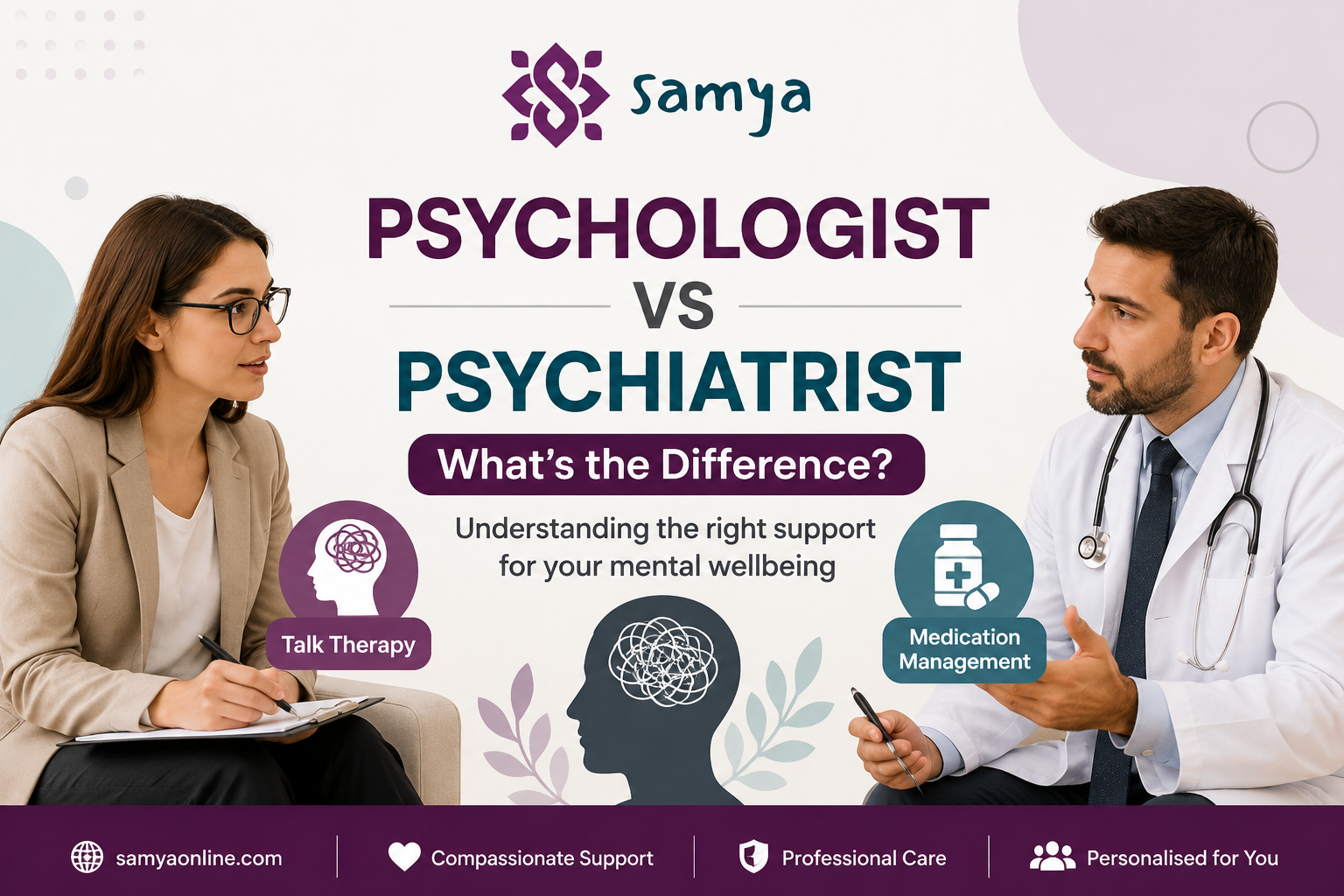
You're finally ready to ask for help, you open Google, and within two seconds, you're stuck on a question nobody warned you about: Do you need a psychologist or a psychiatrist? It sounds like a small detail, but it decides everything from what your first session looks like to whether medication even comes into the picture. The difference between psychologists and psychiatrists trips up almost everyone at first, and honestly, that's fair; the two professions sound so similar that it's easy to assume they're interchangeable.
Here's a quick side-by-side before we go further:
|
Aspect |
Psychologist |
Psychiatrist |
|
Background |
PhD or PsyD in psychology |
Medical degree, specialised in mental health |
|
Main approach |
Talk therapy, counselling, assessments |
Diagnosis, medication management |
|
Can prescribe medicine |
Usually no |
Yes |
|
Typical session focus |
Understanding thoughts, patterns, and emotions |
Symptom management, medical evaluation |
|
Best suited for |
Everyday stress, relationship issues, anxiety, life transitions |
Severe symptoms needing medical treatment |
Where the Confusion Actually Starts
Both professionals work in the same broad space, human minds, emotions, and behaviour, so it's natural to lump them together. But their training paths couldn't be more different. A psychologist spends years studying human behaviour, therapy techniques, and how the mind processes experiences. A psychiatrist, on the other hand, goes through medical training first and then specialises in mental health, which is exactly why they're the ones who can prescribe medication when it's genuinely needed.
What a Psychologist Actually Does
Think of a psychologist as someone trained to help you understand yourself better through conversation. They use structured approaches like cognitive behavioural therapy, talk therapy, and psychological assessments to help you work through anxiety, relationship trouble, work stress, or simply feeling stuck in life. There's no prescription pad involved here; the focus is entirely on patterns, coping tools, and long-term emotional growth. If you've ever wondered whether you need a counsellor or a psychologist, this is usually the first fork in the road people face.
What a Psychiatrist Brings to the Table
A psychiatrist steps in when symptoms are more intense or biologically rooted- think severe depression, panic disorders, or conditions where medication genuinely changes the outcome. Because of their medical background, they can evaluate whether something like sleep disruption or mood swings has a physiological cause and prescribe accordingly. Many people today prefer starting with an online consultation simply because it removes the awkwardness of walking into an unfamiliar space, and it's often the fastest way to get an initial evaluation without waiting weeks for an appointment.
So, Who Do You Actually Need?
Here's the honest answer nobody likes hearing: it depends on what you're going through. If you're dealing with everyday overwhelm, relationship strain, or simply want a space to talk things through, a psychologist is usually your starting point. If symptoms feel intense, are physical, or have been going on for months without relief, a conversation with a psychiatrist might be the smarter first step. Plenty of people end up seeing both, working with a psychiatrist for medication support while continuing therapy sessions with a psychologist for the emotional groundwork.
How to Actually Find the Right Fit
This is where most people get stuck scrolling endlessly. Searching for the best psychiatrist or the best psychotherapist near you can feel overwhelming when every profile looks the same on paper. What actually matters is comfort: do you feel heard, does their approach make sense to you, and are they experienced with what you're going through? Credentials matter, sure, but the real test happens in that first conversation. According to the American Psychological Association, both professions are trained to identify and address mental health concerns, just through very different lenses, which is exactly why the right fit often matters more than the title.
The Bottom Line
There's no universal rulebook here. Some people need structured medical support; others need someone to simply listen and help untangle their thoughts week after week. And sometimes, you genuinely won't know which one you need until you've had that first conversation. That's completely okay, starting somewhere is always better than staying stuck overthinking the decision. If online formats feel more convenient right now, it's worth reading up on online therapy versus in-person sessions before you pick.
Frequently Asked Questions
Can a psychologist prescribe medication?
In most cases, no. Prescribing medication is typically reserved for psychiatrists because of their medical training.
Is an online consultation as effective as an in-person visit?
Yes, for most initial evaluations and follow-ups, online consultations work just as well and are often more convenient.
How do I know if I need the best psychotherapist or a psychiatrist?
If your struggles feel more emotional or situational, a psychotherapist is a good starting point. If symptoms feel severe or physical, a psychiatric evaluation is worth considering.
Can I switch between a psychologist and a psychiatrist later?
Absolutely. Many people move between the two, or see both simultaneously, depending on how their needs evolve.
Figuring out the difference between a psychologist and a psychiatrist doesn't have to feel like a guessing game, and you don't have to sort it out alone either. Samya makes it simple to connect with the right professional for exactly where you are right now; just head over to samyaonline.com.