
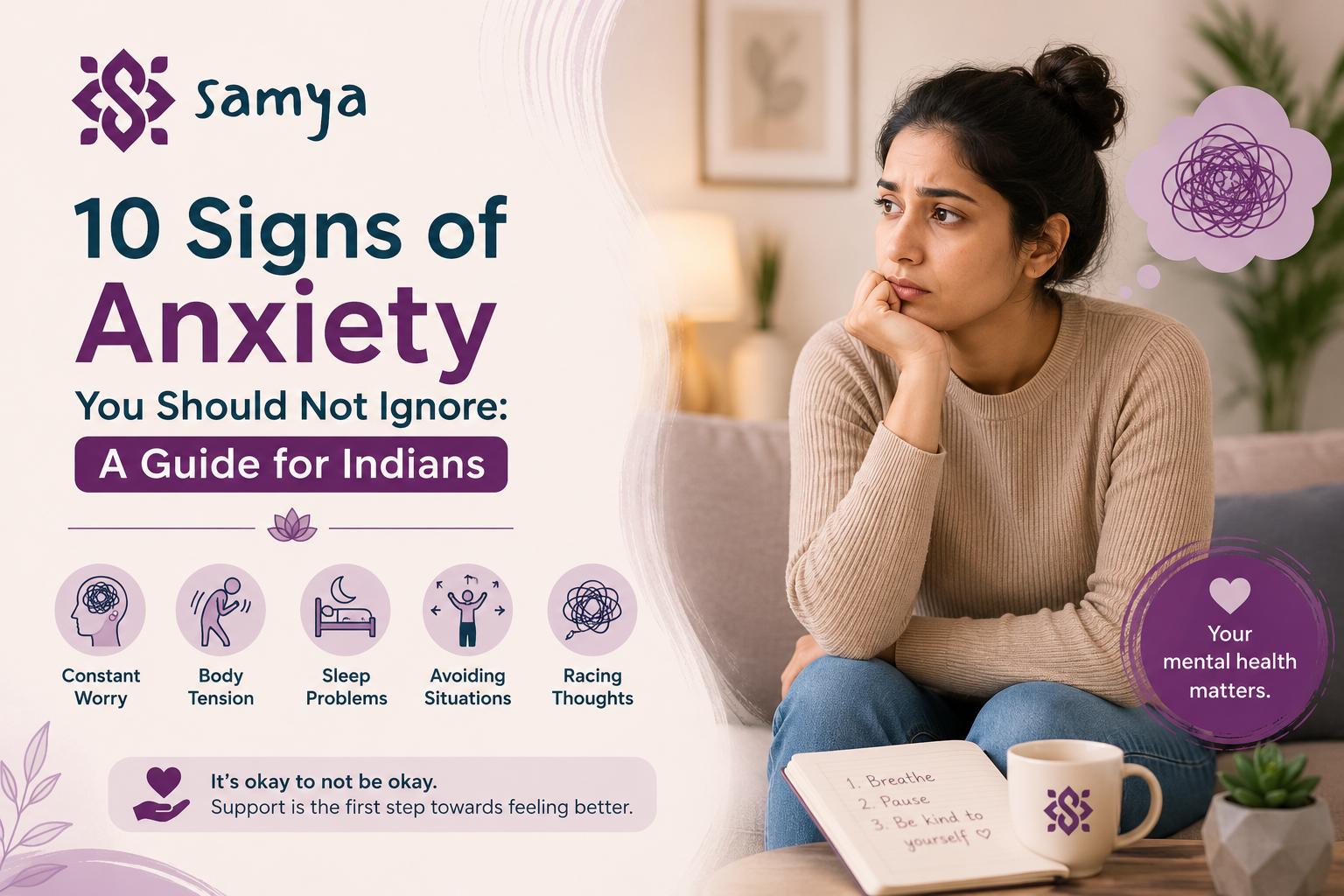
We all have moments when life feels overwhelming. A deadline at work, a family argument, and financial pressure. Stress is something every Indian deals with daily. But there is a difference between everyday stress and anxiety that is quietly taking over your life.
The problem is that most of us ignore the signs. We tell ourselves "yeh toh hota rehta hai" or "sab theek ho jayega." And sometimes it does. But sometimes it does not. And by the time we realise something is wrong, anxiety has already started affecting our sleep, our relationships, and our ability to function normally.
This guide is for anyone who has been feeling off lately but cannot quite put their finger on why.
What Is Anxiety and Why Do Indians Often Miss It
Anxiety is not just nervousness before an exam or a job interview. It is a persistent state of worry, fear, or unease that does not go away even when there is no clear reason for it.
In India, anxiety often goes unrecognised for a few reasons. First, we are not taught to talk about our mental health. Second, many anxiety symptoms show up as physical complaints. headaches, stomach problems, chest tightness. and we treat the body without ever addressing what is happening in the mind. Third, there is still a lot of stigma around saying "I am struggling."
The result is that millions of Indians are living with untreated anxiety without even knowing it.
10 Signs That You May Be Dealing With Anxiety
1. You Worry About Everything, Even Small Things
One of the most common signs of anxiety is excessive worry that feels completely out of proportion to the situation. You find yourself catastrophising. imagining the worst possible outcome for situations that most people would not think twice about.
Sending an email and then spending the next hour wondering if you phrased it wrong. Waiting for a call back and already imagining something terrible has happened. Lying awake at night running through everything that could go wrong tomorrow.
If this sounds familiar, it is worth paying attention to.
2. Your Body Is Constantly Tense
Anxiety lives in the body just as much as it lives in the mind. Many people with anxiety carry chronic physical tension without realising it. tight shoulders, a clenched jaw, a stomach that is always slightly unsettled.
You might get frequent headaches with no clear cause. You might notice that your neck and back are always stiff even though you have not done anything physically strenuous. These are not just physical problems. they are often the body's way of holding onto stress that the mind has not processed.
3. Sleep Has Become Difficult
Anxiety and sleep problems go hand in hand. You might find it difficult to fall asleep because your mind refuses to stop racing. Or you fall asleep fine but wake up at 2 or 3 in the morning with thoughts flooding in. Some people sleep too much as a way of escaping, and still wake up feeling exhausted.
If your relationship with sleep has changed and you cannot link it to any obvious physical reason, anxiety could be playing a role.
4. You Avoid Situations That Make You Uncomfortable
Avoidance is one of anxiety's most powerful tricks. When something makes us anxious, the most natural response is to stay away from it. But over time, the list of things we avoid grows longer, and our world gets smaller.
You start making excuses to skip social events. You put off making phone calls or having difficult conversations. You delay decisions because the thought of making the wrong choice feels unbearable. Each time you avoid something, it provides short-term relief. But it also tells your brain that the thing you avoided was genuinely dangerous, which makes the anxiety worse in the long run.
5. You Feel Irritable or On Edge Almost All the Time
Anxiety does not always look like fear or sadness. Sometimes it looks like irritability. If you find that you are snapping at people you love, getting frustrated over small things, or feeling a constant low-level agitation that you cannot shake, anxiety could be the reason.
This is especially common in Indian men, who are less likely to identify anxiety as the cause of their mood changes and more likely to attribute it to stress at work or problems at home.
6. Concentration Has Become a Struggle
When your mind is preoccupied with worry, there is very little mental space left for anything else. Tasks that used to be easy feel difficult. You read the same paragraph three times and still cannot retain what it said. You sit down to work and find yourself staring at the screen, unable to start.
If your ability to focus has noticeably declined and you cannot explain it through lack of sleep or other reasons, anxiety may be interfering with your cognitive function.
7. You Experience Physical Symptoms With No Medical Explanation
This is one of the most overlooked signs of anxiety in India. People visit doctor after doctor for chest pain, breathlessness, dizziness, nausea, or a racing heart. and all the tests come back normal.
These physical symptoms are real. Anxiety activates the body's fight-or-flight response, which causes genuine physical changes. increased heart rate, shallow breathing, muscle tension, digestive disruption. When this response is triggered repeatedly over time, it leads to chronic physical symptoms that have no structural cause.
If you have been told by doctors that there is nothing medically wrong but you still feel unwell, it is worth exploring whether anxiety is the underlying cause.
8. You Need Constant Reassurance
Do you find yourself repeatedly asking people if everything is okay? Checking and rechecking things you have already done? Seeking reassurance from friends and family about decisions you have made, only to feel better for a short time before the doubt creeps back in?
This cycle of seeking reassurance is very common in anxiety. The reassurance provides temporary relief but does not address the root of the problem, so the need for it keeps coming back. often more intensely over time.
9. You Feel a Sense of Dread Without Knowing Why
Sometimes anxiety does not attach itself to a specific worry. Instead, it sits in the background as a vague but persistent sense that something bad is about to happen. even when everything in your life is objectively fine.
This free-floating dread can be one of the most unsettling aspects of anxiety because there is nothing concrete to point to. People around you might not understand why you are not enjoying life, and you might not be able to explain it yourself.
10. You Have Started Withdrawing From People
Anxiety is exhausting. Social interactions that used to feel natural can start to feel like enormous efforts. You might find yourself turning down plans more often, preferring to stay home, and feeling a sense of relief when an outing gets cancelled.
Over time, this withdrawal can lead to loneliness, which creates a separate set of problems. If you have noticed yourself pulling back from relationships and activities that used to matter to you, it is an important sign to take seriously.
Why Getting Help Is Not a Sign of Weakness
In India, seeking help for mental health is still seen by many as something to be ashamed of. The idea that you should be able to handle your own problems, that therapy is only for people who are "really sick," or that talking to someone outside the family is a betrayal of privacy. these beliefs run deep.
But anxiety is not a character flaw. It is not a sign that you are weak or that you cannot handle life. It is a mental health condition, just like diabetes is a physical health condition, and it responds well to the right support.
The longer anxiety goes untreated, the more it tends to grow. Getting support early means the path back to feeling like yourself is much shorter.
What You Can Do
If several of the signs above feel familiar, the most important thing you can do is talk to someone who understands what you are going through.
At Samya, we work with people across India who are dealing with anxiety, stress, and the kind of persistent worry that makes everyday life harder than it needs to be. Our therapists offer online counselling sessions from the comfort of your home. no commute, no waiting rooms, just a safe and confidential space to talk.
You do not need to have everything figured out before you reach out. You just need to take the first step.
Frequently Asked Questions
Is anxiety common in India?
Yes, anxiety is one of the most common mental health conditions in India, though it is significantly underreported due to stigma and lack of awareness. Many people live with anxiety for years before seeking help.
Can anxiety go away on its own?
Mild anxiety related to a specific situation often passes once the situation resolves. However, generalised anxiety that persists over weeks or months typically needs some form of support to improve. whether that is therapy, lifestyle changes, or a combination of both.
Is online therapy effective for anxiety?
Yes. Research consistently shows that online therapy is as effective as in-person therapy for anxiety. The added convenience of being able to attend sessions from home makes it easier for many people to stay consistent with their treatment.
How do I know if what I am feeling is anxiety or just stress?
Stress is usually linked to an external cause and tends to ease when the situation changes. Anxiety persists even when there is no obvious trigger, and it often involves a fear of future events or a sense of dread that does not have a clear source.
What kind of therapy helps with anxiety?
Cognitive Behavioural Therapy, also known as CBT, is one of the most well-researched and effective approaches for anxiety. It helps you identify and change the thought patterns that fuel anxious feelings. At Samya, our therapists use evidence-based approaches tailored to each individual.