
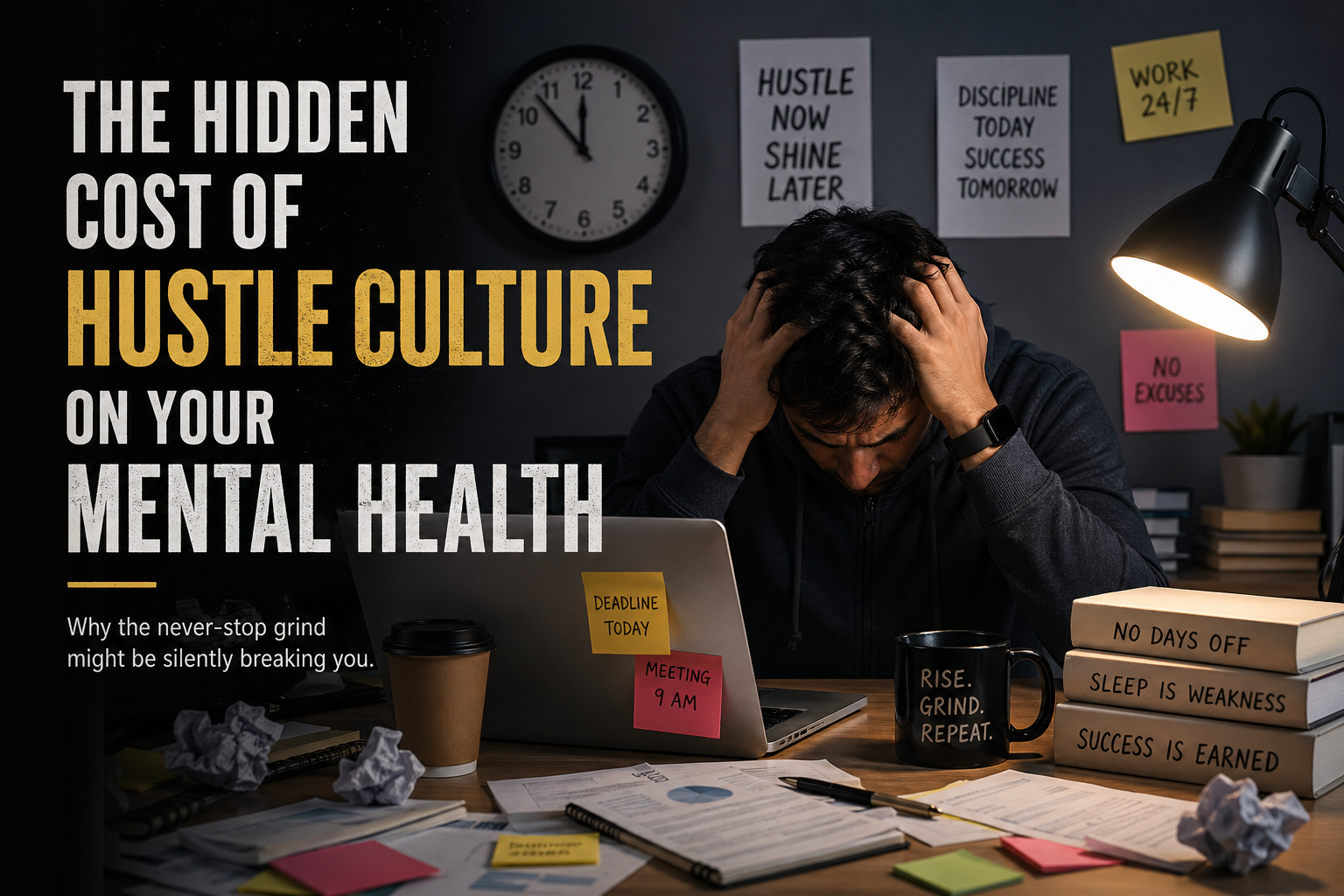
From success dreams to silent stress, the race to stay ahead may be costing more than you think
|
Topic |
Quick Insight |
|
Main Concern |
Hustle culture and mental health |
|
Common Result |
hustle culture burnout |
|
Emotional Impact |
hustle culture and anxiety |
|
Long-Term Risk |
Hustle culture and depression |
|
Better Fix |
work-life balance mental health |
Introduction
In today’s fast-moving world, being busy is often seen as a badge of honour. If you are working late, answering emails at midnight, or skipping weekends, many people call it ambition. This is where hustle culture and mental health become deeply connected. The pressure to always do more, earn more, and stay productive has created a lifestyle that looks glamorous online but feels draining in real life.
The hidden cost of hustle culture is not always visible at first. It starts with tiredness, stress, and irritability. Then it grows into anxiety, emotional exhaustion, and serious health problems. Many professionals, students, creators, and business owners are now asking one big question: Why is hustle culture dangerous?
What Is Hustle Culture?
Hustle culture is the idea that constant work leads to success. It promotes waking up early, sleeping less, working nonstop, and pushing yourself beyond limits. Social media often celebrates this lifestyle with quotes like “sleep when you are rich” or “rise and grind.”
But the truth about how hustle culture affects mental health is very different. Human beings are not machines. The mind needs breaks, peace, and emotional recovery. Without that, productivity becomes pain.
This is why many experts now call hustle culture toxic. It normalises stress and makes burnout look normal.
Hustle Culture Effects on Mental Health
One of the biggest hustle culture effects on mental health is constant pressure. When your worth depends only on output, even rest feels like guilt. You may sit on a sofa, yet your mind keeps saying you should be working.
This leads to hustle culture and anxiety. People start worrying about falling behind, missing opportunities, or not doing enough. Notifications, deadlines, and comparison with others increase stress levels daily.
Another major issue is hustle culture and depression. When someone works hard but never feels satisfied, emptiness begins to grow. They may lose interest in hobbies, relationships, and simple joys.
Always Working, Mentally Exhausted: The New Reality
Many people today are always working mentally exhausted. They may be active physically, but emotionally, they feel numb. Even after sleep, they wake up tired. Even after a holiday, they still feel stressed.
This happens because overwork not only tires the body. It tires the nervous system. The brain remains in survival mode, constantly planning, reacting, and worrying.
That is why overworking and mental health should be discussed more openly. Success without peace is not success.
Hustle Culture Burnout Symptoms You Should Notice
Hustle culture burnout often starts quietly. You may feel less motivated, more angry, or unable to focus. Small tasks begin to feel heavy. Confidence drops.
Common hustle culture and burnout symptoms include sleep problems, headaches, emotional numbness, brain fog, low patience, and feeling detached from work. Some people cry suddenly. Others become cold and silent.
If ignored, burnout can take months to recover from. This is another reason why working all the time is bad for you.
Hustle Culture in India: Rising Pressure
Hustle culture in India is growing rapidly, especially in metro cities and startup spaces. Long office hours, side hustles, exam pressure, freelancing, and family expectations create a heavy mental load.
Young professionals often feel they must achieve everything before 30. Students feel they must never slow down. Entrepreneurs feel guilty if they rest.
The result is rising stress and poor work-life balance, as well as mental health outcomes. India’s ambition is powerful, but it needs healthier systems too.
Grind Culture Effects on Wellbeing
The grind culture effects on well-being are not limited to stress. Relationships suffer when there is no time for family. Creativity drops when the brain is overloaded. Physical health declines when sleep and food habits worsen.
People trapped in grind mode often forget who they are outside work. Their identity becomes only performance. This emotional dependency can be dangerous.
That is another hidden cost of hustle culture that many realise too late.
How to Protect Yourself
Understanding how hustle culture affects mental health is the first step. The next step is boundaries. Work hard, but do not worship exhaustion.
Take breaks without guilt. Protect sleep. Keep hobbies alive. Spend time with people who value you beyond productivity. Learn that rest is fuel, not failure.
Healthy ambition is possible. Success and peace can exist together when work-life balance and mental health become a priority.
FAQs
Why is hustle culture dangerous for young people?
Because it teaches them to tie self-worth only to achievement. This increases hustle culture and anxiety, and emotional pressure early in life.
Can hustle culture cause depression?
Yes, prolonged stress and unmet expectations can lead to hustle culture and depression symptoms.
What are hustle culture burnout symptoms?
Common signs include exhaustion, poor sleep, irritability, low motivation, brain fog, and feeling disconnected.
Why is working all the time bad for you?
Constant pressure harms focus, relationships, sleep, and emotional stability. Overworking and mental health are strongly linked.
Is hustle culture in India becoming common?
Yes, especially in cities, startups, and competitive sectors. Hustle culture in India is rising fast.
Final Thoughts
Ambition is not the problem. The problem begins when nonstop struggle becomes normal. The hidden damage of hustle culture and mental health issues is real, and more people are speaking up. Work can build dreams, but peace protects the person living them.