
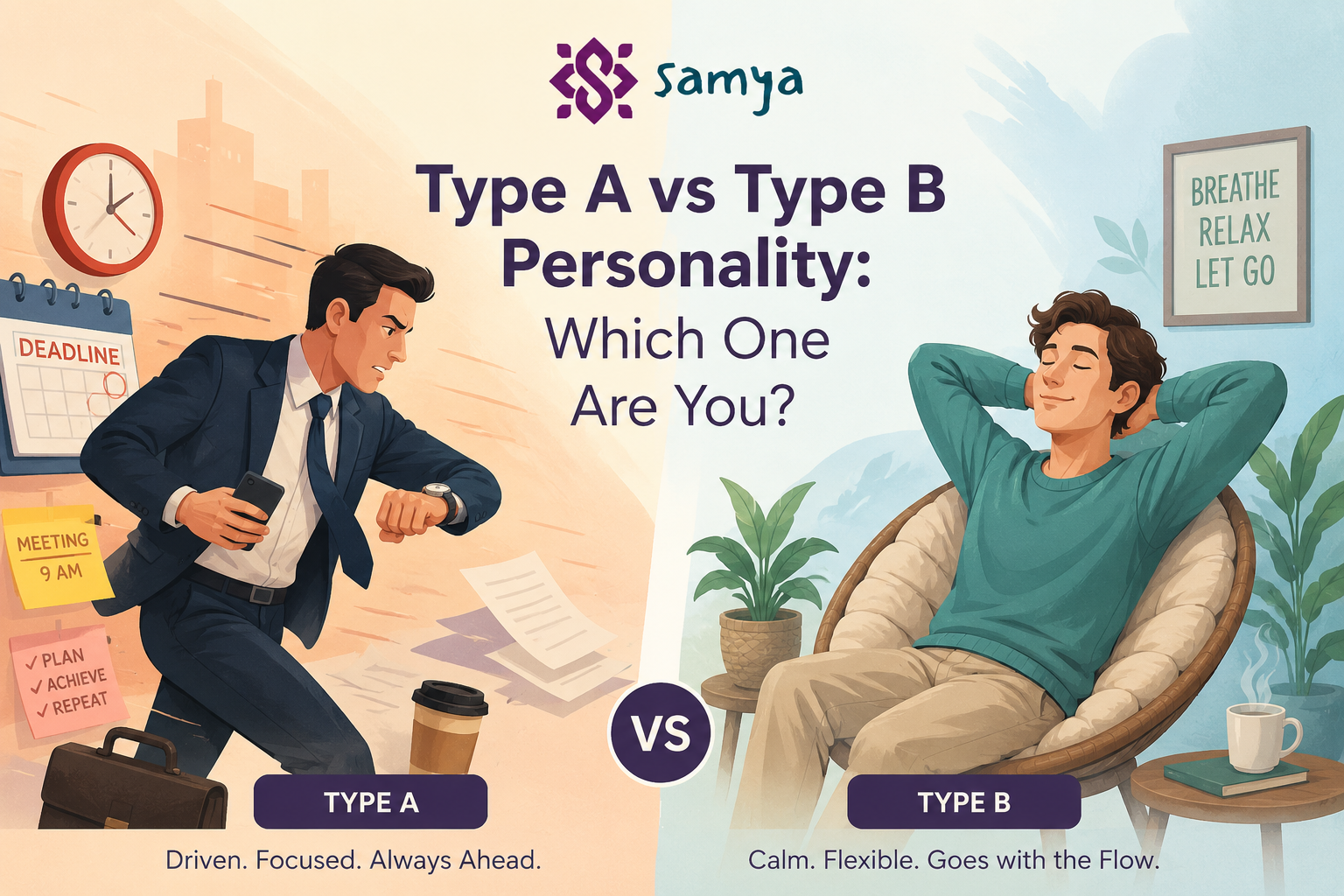
Ever noticed how some people can't sit still without checking their phone every two minutes, while others seem perfectly happy watching the world go by? That's not just a mood thing; it's often down to personality type. The idea of type A and type B personalities has been around for decades. Honestly, it still explains a lot about why your friend group has that one person who colour-codes their calendar and another who "will figure it out eventually."
Here's a quick snapshot before we dig deeper:
|
Trait |
Type A Personality |
Type B Personality |
|
Pace of life |
Fast, always racing the clock |
Relaxed, takes things as they come |
|
Competitiveness |
High, loves winning |
Low prefers cooperation |
|
Stress response |
Gets wound up easily |
Stays calm under pressure |
|
Work style |
Multitasks, hates delays |
Focuses on one thing at a time |
|
Patience |
Runs thin, especially in queues |
Generally high |
Where Did the Type A and Type B Idea Come From?
The concept didn't come from a personality quiz you'd find online; it started with two cardiologists in the 1950s who noticed something odd about their patients. The ones who were constantly rushed, irritable, and competitive seemed to land in their waiting room far more often than the laid-back ones. That observation eventually turned into the personality framework we still talk about today, even though the science around it has evolved quite a bit since then.
What Does a Type A Personality Actually Look Like?
Picture someone who walks fast, talks fast, and gets visibly annoyed when the Wi-Fi buffers for more than three seconds. That's your classic Type A. These folks are driven, ambitious, and often the first to raise their hand for extra responsibility at work. They thrive on deadlines and tend to measure their worth through achievement. The flip side? They can be prone to irritability, impatience, and a nagging feeling that they're never doing quite enough, a pattern that often overlaps with overthinking. Sound familiar to anyone you know, or maybe even yourself?
And What About Type B?
Now flip the script. Someone with this laid-back nature takes life at their own pace. They're not lazy, far from it; they just don't feel the need to turn every task into a race against the clock. Type B folks tend to be more reflective, creative, and easier to be around because they don't carry that constant undercurrent of urgency. They handle setbacks with a shrug rather than a spiral, which honestly sounds pretty appealing in today's chaotic world.
The Real Differences Between the Two
The real gap between these two temperaments isn't really about one being "better" than the other it's about how each type processes stress, ambition, and time. Type A people often excel in high-pressure environments where quick decisions matter, though that same intensity can tip into burnout if it's never switched off. Type B individuals, on the other hand, bring steadiness and patience that can balance out a team full of overachievers. Most workplaces, families, and friend groups actually need a mix of both to function well.
Can You Be a Bit of Both?
Here's the thing nobody tells you upfront: very few people are purely Type A or purely Type B. Most of us sit somewhere on a spectrum, leaning one way depending on the situation. You might be laid-back on weekends but turn into a stress machine during exam season or a big work deadline. That's completely normal. Personality isn't a fixed label; it shifts with context, energy levels, and even how much sleep you got last night, and if that always-on Type A pace feels less like drive and more like exhaustion, it's worth reading about the hidden cost of hustle culture.
Why Knowing Your Type Actually Helps
Understanding whether you lean Type A or Type B isn't just a fun fact for your next group chat debate. It can genuinely help you figure out how you handle pressure, what kind of environment helps you thrive, and where your relationships might hit friction. A Type A person paired with a Type B partner, for instance, might clash over punctuality or planning not because either is wrong, but because their internal clocks run differently. It's the kind of mismatch couple counselling is often built to work through.
Frequently Asked Questions
Is Type A personality bad for health?
Not inherently, but the constant urgency and competitiveness linked to Type A behaviour can contribute to higher stress levels over time if left unchecked.
Can a Type A person become more Type B?
Yes, with conscious effort, slowing down, practising patience, and letting go of the need to control every outcome can shift the balance over time.
Is there a Type C or Type D personality?
Some researchers have proposed additional types, but Type A and Type B remain the most widely recognised and discussed.
Which type is more successful?
Success depends on the field and the person, not the type. Type A traits suit fast-paced careers, while Type B traits often shine in creative or collaborative roles.
Whichever end of the spectrum you fall closer to, the goal isn't to change who you are, it's to understand yourself better and build habits that work with your natural pace rather than against it. If you'd like to explore this further or talk it through with someone, Samya's team is just a click away at samyaonline.com.