
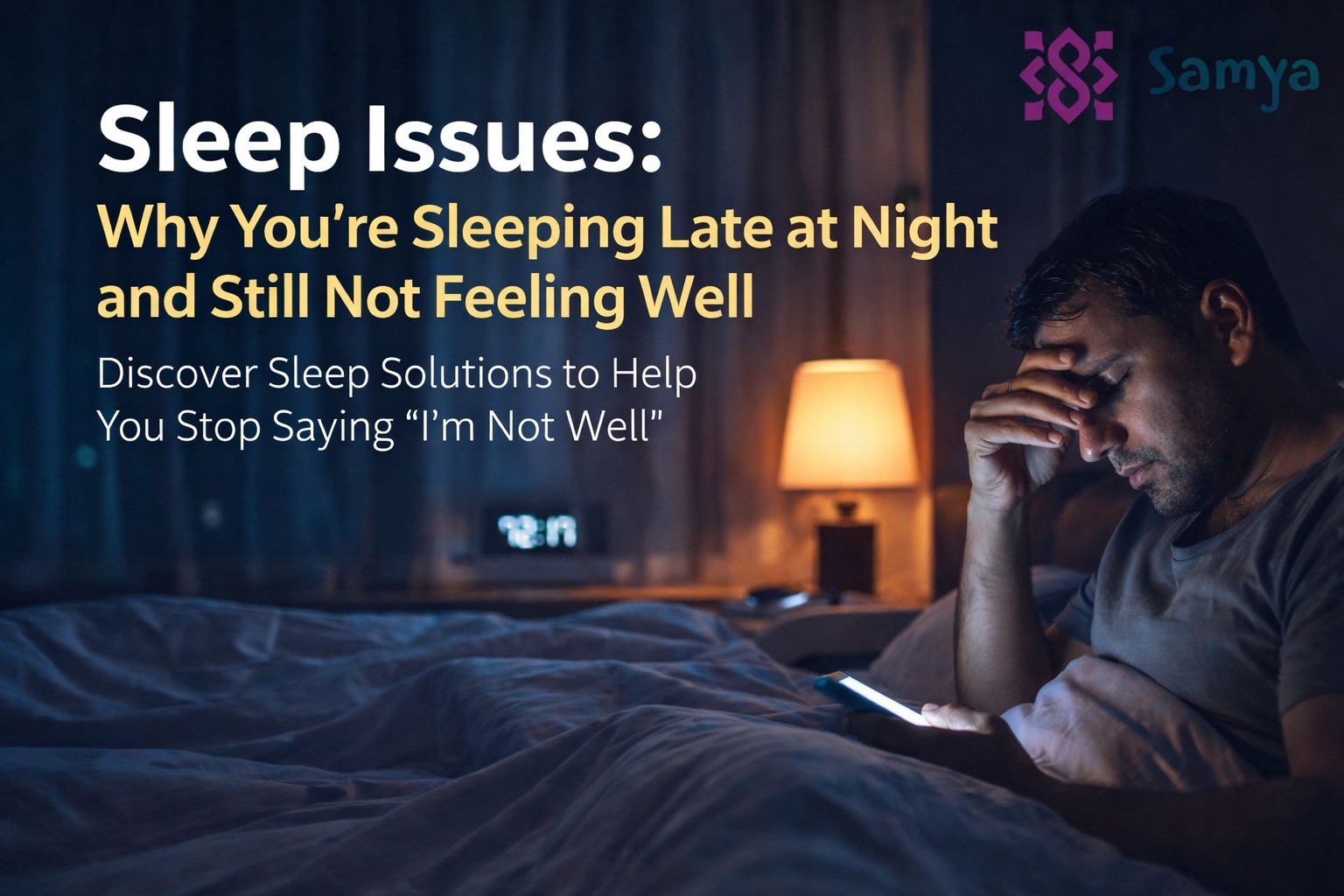
You go to bed tired. You scroll for "just five minutes." Suddenly it's 2:17 AM. The alarm rings at 6. You wake up heavy-headed, irritated, and wondering what went wrong. If this sounds familiar, you are not alone. Sleep issues are quietly becoming one of the biggest lifestyle problems of our time. From sleeping late at night to waking up not well, millions of people are struggling to find real sleep solutions.
In this guide, we break down what is really happening, why you may feel "I'm not well" even after 7–8 hours in bed, and what practical sleep solutions actually work.
Why Are So Many People Sleeping Late at Night?
Sleep specialists say the problem is not just one thing. It is a mix of stress, screen time, irregular schedules, and mental overload. Sleeping late at night has become normalised. Work deadlines stretch past midnight. OTT platforms autoplay the next episode. Social media never sleeps.
But your body follows a biological clock. When you keep sleeping late at night, you disrupt melatonin production the hormone that controls your sleep-wake cycle. According to Sleep Foundation, melatonin plays a critical role in regulating your sleep timing. Over time, disrupting it leads to serious sleep issues.
And here is the catch: even if you manage 6–7 hours of sleep after going to bed late, the quality of that sleep drops. That is why you wake up feeling not well.
When "I'm Not Well" Is Actually a Sleep Problem
Many people say "I'm not well" without realising the root cause is poor sleep. Headaches, mood swings, low energy, and brain fog are all common signs of sleep issues.
Sometimes, it may even point to an excessive sleep condition. This makes you feel tired even after long hours in bed. It is not just about quantity it is about sleep quality.
Here is a quick look at common sleep patterns and what they may indicate:
|
Sleep Pattern |
Possible Cause |
How You Feel |
|
Sleeping late at night daily |
Poor routine, screen overuse |
Groggy, not well in morning |
|
8+ hours but still tired |
Excessive sleep condition |
Heavy, low motivation |
|
Frequent wake-ups |
Stress or anxiety |
Irritated, unfocused |
|
Trouble falling asleep |
Insomnia |
Restless, frustrated |
If you often wake up feeling not well, your body may be signalling deeper sleep issues.
What Is Insomnia and Why Is It Rising?
Insomnia is one of the most common sleep issues worldwide. It means difficulty falling asleep, staying asleep, or waking up too early. You can learn more about common causes of insomnia to understand your situation better.
Many people look for the best way to overcome insomnia, hoping for quick relief. Sleep specialists, however, always recommend evaluating the root cause first.
The best way to overcome insomnia depends entirely on the cause. Stress-related insomnia is handled differently from long-term insomnia. What works as the best way to overcome insomnia for one person may not work for another.
Many people searching for the best way to overcome insomnia are actually dealing with OCD or repetitive thought patterns that silently disrupt sleep night after night.
Before jumping to quick fixes, sleep specialists strongly suggest trying lifestyle-based sleep solutions first.
Excessive Sleep Condition: The Other Side of the Problem
While many struggle with too little sleep, others face an excessive sleep condition. This causes extreme daytime sleepiness despite spending long hours in bed.
If you are sleeping late at night and then oversleeping on weekends, your internal clock gets confused. This irregular cycle can trigger excessive sleep condition signs.
People dealing with this often say "I'm not well" throughout the day without realising their disrupted sleep rhythm is the real reason. Work pressure and deadlines are a major trigger explore how corporate mental wellness programs are helping people sleep better and perform well.
Sleep Solutions That Actually Work
So what are the real sleep solutions that specialists recommend?
Fix your sleep timing. Stop sleeping late at night regularly. Aim for a consistent bedtime, even on weekends. This single habit can reduce many sleep issues over time.
Cut screen time before bed. Reduce screen exposure at least one hour before sleeping. Blue light delays melatonin release and pushes your body into sleeping late at night mode.
Watch what you eat and drink. Avoid heavy meals and caffeine in the evening hours. These small steps can dramatically improve sleep quality.
Try natural sleep solutions. Breathing exercises, warm showers, light stretching, and calming routines before bed are all effective sleep solutions backed by sleep specialists.
Reach out to a sleep specialist. If lifestyle changes do not help, a qualified sleep specialist can guide you toward the best way to overcome insomnia suited to your specific situation. Always take any sleep support under proper specialist guidance.
The Mental Health Link
Sleep issues are closely connected to stress and anxiety. When you feel not well emotionally, sleep suffers. And when sleep suffers, you feel even more not well. It becomes a damaging cycle.
When you feel not well emotionally, you may also be quietly experiencing signs of depression and that directly impacts your sleep quality.
Many people searching for the best way to overcome insomnia are actually dealing with emotional overload. In such cases, sleep specialists suggest that addressing the root emotional cause works far better than relying only on quick sleep fixes.
If you often wake up saying "I'm not well," take a closer look at your emotional health too.
When Should You Speak to a Sleep Specialist?
If sleep issues last more than three weeks, it is time to reach out to a sleep specialist. Consistently sleeping late at night, repeated insomnia, or signs of an excessive sleep condition should never be ignored.
The good news is that you do not have to step out of your home to get help. Online therapy from home is now a proven and accessible way to address sleep-related concerns with qualified specialists.
A sleep specialist may suggest routine correction, relaxation approaches, or guide you toward the best way to overcome insomnia that fits your lifestyle and condition.
Final Word
Sleep is not a luxury. It is survival.
Sleeping late at night may seem harmless, but over time it can make you feel not well every single day. Whether it is insomnia or an excessive sleep condition, ignoring sleep issues only makes things worse.
Instead of endlessly searching for the best way to overcome insomnia online, focus first on practical sleep solutions. And when needed, connect with a sleep specialist for the right guidance suited to your lifestyle.
Because sometimes, when you say "I'm not well" — your body is simply asking for better sleep.
FAQs
What is the best way to overcome insomnia?
The best way to overcome insomnia depends on the root cause. A consistent sleep schedule, reduced screen time, and speaking to a sleep specialist can all help significantly.
Is there one universal sleep solution for insomnia?
No. Every person's sleep pattern is different. The best way to overcome insomnia varies from person to person, and sleep solutions should be chosen accordingly.
Can sleeping late at night cause health problems?
Yes. Sleeping late at night regularly disturbs your body clock and leads to growing sleep issues over time.
What is an excessive sleep condition?
It is a condition where a person feels overly sleepy and not well throughout the day, despite spending enough hours in bed.
Why do I feel not well even after sleeping?
Poor sleep quality, insomnia, or an excessive sleep condition could all be reasons why you feel not well even after a full night in bed. If substance use is also a concern, explore our guide on alcohol, nicotine & addiction counseling for more clarity.